Iran Casino Floor: The Brutal Legal Reality Behind the Velvet Rope
There is no legal casino floor in Iran. Zero. Not a single licensed roulette wheel, not one regulated blackjack table, not even a government-sanctioned slot machine. The entire gambling ecosystem inside the Islamic Republic operates on a fault line between religious prohibition and underground economics, and if you think you can walk into a Tehran resort and cash out chips at a cage, you are dangerously wrong. 🎰
The Constitutional Kill Switch on Gambling Hardware
Article 705 of the Iranian Civil Code, reinforced by the Constitution's Article 4, categorizes gambling as haram and explicitly forbids any transaction tied to wagering. This is not a soft regulatory guideline. It is a hard-coded legal circuit breaker that shuts down every piece of gaming hardware before it even gets imported. Customs seizures of card shufflers, RFID chip trays, and electronic roulette terminals happen at Bandar Abbas and Imam Khomeini International Airport with monotonous regularity. The state treats a professional-grade baccarat shoe the same way it treats contraband narcotics.
The only exception carved into this wall is the Iran National Lottery, which operates under a special religious decree because it is classified as a charitable donation mechanism rather than pure gambling. That single loophole has been stretched to its absolute limit, and no private operator has ever been granted a casino license through it. Ever.
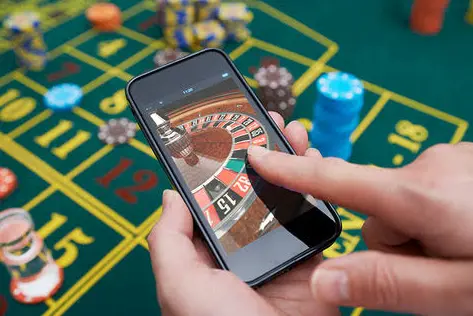
What Actually Exists on the Ground: Underground Floors and Kish Island Ambiguity
Kish Island and Qeshm Island operate as free trade zones with their own legal frameworks, and this is where the confusion breeds. Foreign tourists and even some locals whisper about hotel basement floors with felt tables and unmarked cash cages. Here is the technical reality: those operations are not licensed. They are tolerated, temporarily, by local enforcers who look the other way for a cut. The moment a new prosecutor rotates into the jurisdiction, the equipment gets smashed and the operators get prosecuted under Article 705. The Iran casino floor is a pop-up phenomenon, not a permanent infrastructure.
In Tehran, Mashhad, and Isfahan, the underground scene uses private residences and backroom hookah lounges. The hardware is mobile: foldable poker tables, battery-powered shufflers, and encrypted payment apps that settle in cryptocurrency or hawala transfers within minutes. These operations run on a 72-hour rotation cycle to stay ahead of Vice Police raids. The house edge is not set by a regulated gaming commission; it is set by the operator's need to bribe three different enforcement layers before the night ends.
The Penalty Structure That Kills Investment
Under Iranian criminal law, gambling operators face 6 months to 2 years in prison plus 74 lashes. Participants face lesser penalties, but repeat offenders get flagged in the national judicial database, which blocks bank account access and passport renewal. For a foreign national, the consequence escalates to immediate deportation and a permanent entry ban. This penalty asymmetry is why no international gaming conglomerate has ever signed a management contract for an Iran casino floor. The risk-to-reward ratio is mathematically absurd.

Online Gambling: The Proxy Server Workaround
The Iranian government blocks over 5,000 gambling domains through its Smart Filtering System, but the technical community routes around it using V2Ray, Shadowsocks, and Tor bridges. Online casinos that accept Iranian players operate offshore, typically licensed in Curaçao or Malta, and settle transactions through crypto wallets. The Iranian player's real risk is not the game itself but the withdrawal process: offshore sites routinely freeze Iranian accounts citing "compliance review" and pocket the balance. There is no regulatory body to file a complaint with, because the player was breaking domestic law by accessing the site in the first place.
The Central Bank of Iran has instructed domestic payment processors to flag any transaction with a gambling merchant code, and the country's financial intelligence unit monitors crypto flows above 5,000 USD equivalent. This surveillance layer makes large-scale underground casino operations financially fragile. A single flagged wallet can unravel an entire payment chain.
Religious Decree Loopholes That Do Not Actually Exist
Some operators claim to run "skill-based" poker tournaments where the house takes a fixed entry fee instead of a rake. This is a legal fiction. Iranian courts have consistently ruled that any game where the outcome depends on chance and money changes hands constitutes gambling, regardless of how the fee is structured. The only skill-based exception recognized in jurisprudence is horse racing, and even that is heavily restricted to state-sanctioned tracks with no private betting windows. 🐎
The bottom line for anyone auditing this market: there is no legal framework for a commercial casino floor in Iran, no path to licensure, and no enforcement environment stable enough to justify the capital expenditure. The underground operations that exist are criminal enterprises with a lifespan measured in months, not years.